

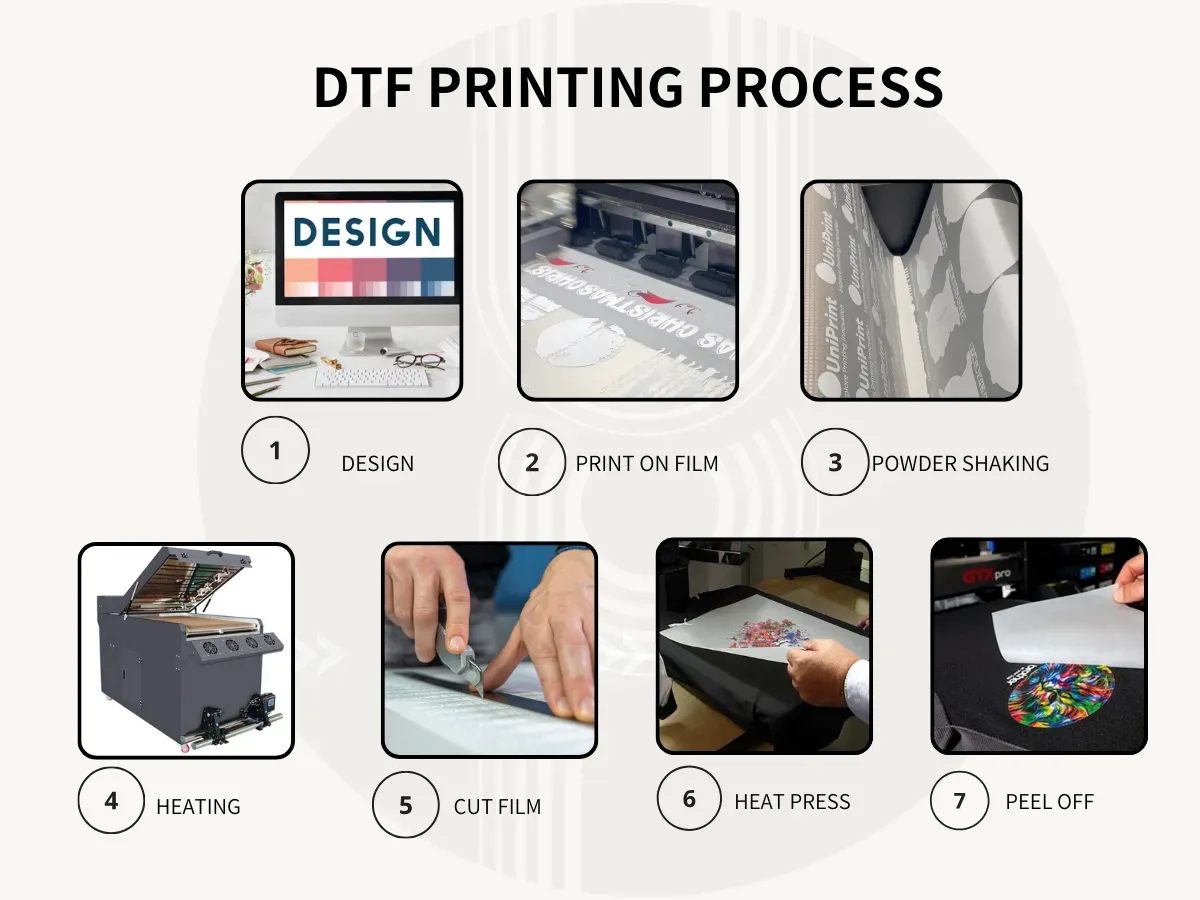
DTF printing has reshaped how brands translate bold designs onto fabrics. This versatile method uses film, adhesive powder, and pigment inks to create transfers that withstand washing. Its flexibility across fabrics and vibrant color reproduction make it popular for small runs and custom projects. A streamlined workflow helps reduce waste, speed up production, and improve consistency from one batch to the next. This intro sets the stage for practical techniques that boost color fidelity and long-term performance.
From a terminology standpoint, this workflow is also known as direct-to-film transfers, a film-based textile printing approach that delivers bold imagery. For best results, follow DTF printing tips that emphasize ink quality, proper film handling, and precise heat-press timing. Optimizing printer setup for DTF ensures consistent color, alignment, and adhesion across batches. DTF ink quality and compatible powders drive durability, while careful substrate prep and post-press care help achieve durable transfers. By using LSIs, such as film-based textile printing, heat-transfer film processes, and pigment-based inks, you create semantically rich content that helps readers and search engines understand the topic.
DTF Printing Fundamentals: Materials, Inks, and Preparation
DTF printing starts with choosing reliable materials that feed smoothly and bond securely. Invest in quality DTF film, a dependable adhesive powder, and a compatible carrier sheet to establish a solid foundation for durable transfers. This initial step aligns with broader DTF printing tips, because consistency at the material level directly affects edge sharpness, color saturation, and adhesion during the transfer process.
Take time to prepare your workspace and establish standard workflows. Proper substrate prep, platen cleanliness, and pre-press routines help reduce misregistration and white edges. Emphasizing DTF ink quality and precise color management early in the process sets the stage for consistent results across batches and contributes to the overall durability of the transfers.
Mastering Direct-to-Film Transfers: From Film to Fabric
The core of direct-to-film transfers is a smooth handoff from film to garment. This involves printing with vibrant color, then applying a calibrated powder layer and curing it to create a stable transfer that adheres well under washing conditions. Following established DTF printing tips ensures the design remains crisp and accurately reproduced on diverse fabrics.
Careful handling between printing and pressing helps preserve fine details. Inspect the film for defects, verify powder coverage, and maintain a clean transfer surface to prevent dust or fingerprints from compromising adhesion. When done well, direct-to-film transfers yield durable results that resist cracking, peeling, and color bleeding during wear and laundering.
Ensuring DTF Ink Quality for Lasting Vibrancy
DTF ink quality is a cornerstone of color fidelity and longevity. Use pigment-based inks designed for durability, ensuring strong lightfastness and resistance to washing. Regular nozzle checks, printhead maintenance, and alignment verification support consistent output and minimize color shifts across runs.
Color stability comes from disciplined workflow and proper ICC profiling. Calibrate inks with printer profiles tailored to your film and substrate, perform test prints, and adjust gamma and saturation to keep hues true to the original design. High-quality DTF inks paired with careful color management help deliver durable transfers that stay vibrant over time.
Optimizing Printer Setup for DTF Efficiency
Printer setup for DTF should balance speed with precision. Configure high-resolution settings (at least 1200 dpi, ideally 2400 dpi with capable RIPs) and enable features that reduce banding. If using a RIP or software, create templates for common garment colors to standardize output and minimize waste, while documenting ink density and media type for reproducibility.
Develop a consistent workflow with color management and calibration as core pillars. Maintain accurate profiles, perform regular test prints, and save successful configurations for future batches. This disciplined approach to printer setup for DTF reduces variability and helps you achieve durable transfers that look the same batch after batch.
Powder Mastery and Heat Press for Durable Transfers
Even powder application and proper curing are essential for sharp edges and reliable adhesion. Use a calibrated shaker or hopper to distribute a thin, uniform layer, then cure per your material’s guidelines. Inadequate curing can weaken bond strength, while over-curing may dull color—both threaten the durability of the transfer.
Prepare the transfer with careful timing and handling to preserve image integrity. Align the film on a clean surface, inspect for defects, and run a test contour on sacrificial swatches. Controlled heat press parameters—temperatures around 305–320°F (150–160°C), dwell times of 12–15 seconds, and medium to firm pressure—tend to yield durable transfers that resist washing and wear.
Troubleshooting and Maintenance for Consistent DTF Results
Proactively addressing common issues—such as color bleeding, misregistration, or white edges—helps protect the overall quality of your DTF projects. Check film compatibility, verify powder distribution, and ensure heat press settings match manufacturer recommendations. Keeping a log of successful adjustments for different fabrics or inks supports ongoing refinement of your DTF printing tips.
Ongoing maintenance is the backbone of durable transfers. Perform regular nozzle checks, printhead cleaning, and film-path servicing. Stock spare parts and consumables, and schedule periodic test prints to catch drift early. A well-maintained workflow reduces surprises and sustains high-quality, durable transfers across many production cycles.
Frequently Asked Questions
What is DTF printing and how do direct-to-film transfers work for apparel?
DTF printing (direct-to-film transfers) is a process where your artwork is printed on a special film, coated with an adhesive powder, and then heat-pressed onto fabric. The result is vibrant color with good adhesion across a wide range of materials. For durable transfers, use quality film, verify powder application, and optimize heat-press timing.
How can I optimize DTF ink quality to achieve durable transfers on various fabrics?
DTF ink quality directly affects color, durability, and washfastness. Choose pigment-based DTF inks designed for durability, perform regular nozzle checks, and run test prints to catch clogs or misalignment early. Maintaining consistent ink quality helps produce durable transfers that resist fading after laundering.
What printer setup for DTF delivers consistent results and minimizes color issues?
A solid printer setup for DTF starts with high-resolution print settings (at least 1200 dpi; 2400 dpi if supported), anti-banding features, and ICC profiles tailored to your printer, ink, and film. Document settings—ink density, media type, and color management—so you can reproduce the same outcomes across runs and reduce variability.
What are essential DTF printing tips to prevent white edges and misregistration during direct-to-film transfers?
Key DTF printing tips include using high-quality film, ensuring even powder coverage, correct curing, and precise heat-press timing. Inspect the film before pressing and run a small test transfer if color accuracy matters to minimize white edges or misregistration in direct-to-film transfers.
How should I prepare the substrate and powder for durable transfers in direct-to-film transfers?
Prepare the substrate by pre-washing fabrics to remove sizing and finishes, ensuring a clean, smooth surface. Apply adhesive powder evenly and cure according to the material guidelines. Proper substrate prep and powder curing are critical for strong adhesion and durable transfers.
DTF printing tips: what troubleshooting steps help when colors fade or wash out?
When colors fade or wash out, verify film compatibility, recheck powder application, and confirm heat-press temperature and dwell time match manufacturer recommendations. Keep test swatches, log successful settings for different fabrics, and adjust color profiles to restore vibrant, durable transfers.
| Tip | Focus | Key Point |
|---|---|---|
| Tip 1: Start with quality DTF materials | Materials | Use reliable DTF film, adhesive powder, and carrier sheet; consistency directly affects sharpness and long-term durability. |
| Tip 2: Use high-quality DTF inks | Inks | Choose pigment-based inks designed for durability; monitor nozzle health and perform regular nozzle checks to maintain print accuracy. |
| Tip 3: Calibrate color and manage your profiles | Color Management | Create or source ICC profiles for your printer, ink, and film; run test prints and adjust gamma, saturation, and contrast for consistent results. |
| Tip 4: Optimize printer settings and workflow | Printer Setup | Use high resolution (at least 1200 dpi, ideally 2400 dpi with RIP); standardize output with templates; document all settings (ink density, print mode, media) for repeatability. |
| Tip 5: Ensure even powder application and curing | Powder & Curing | Spread a thin, uniform adhesive powder layer with a calibrated tool and cure per guidelines to ensure sharp edges and durable transfers. |
| Tip 6: Prepare the transfer with proper timing and handling | Handling | Keep the transfer clean and defect-free between printing and pressing; inspect for defects and consider test contours on a small area. |
| Tip 7: Control heat press parameters for best adhesion | Heat Press | Aim for 305–320°F (150–160°C) with 12–15 seconds and medium to firm pressure; test with swatches to account for film and substrate variations. |
| Tip 8: Use carrier fabrics and proper substrate prep | Substrate Prep | Pre-wash/dry fabrics; dark fabrics may need a white underbase; tailor handling to fabric color to improve adhesion and color fidelity. |
| Tip 9: Troubleshoot common issues proactively | Troubleshooting | Address color bleeding, misregistration, or white edges by verifying film compatibility, powder application, and heat settings; maintain a log for batch-specific adjustments. |
| Tip 10: Maintain your equipment and monitor durability over time | Maintenance | Regular nozzle checks, printhead maintenance, and routine cleaning; keep spare parts, and run periodic tests to detect drift early. |
Summary
DTF printing table summarizing the key expert tips for achieving durable direct-to-film transfers, highlighting material, ink, color management, printer settings, powder handling, heat pressing, substrate prep, troubleshooting, and ongoing maintenance.