

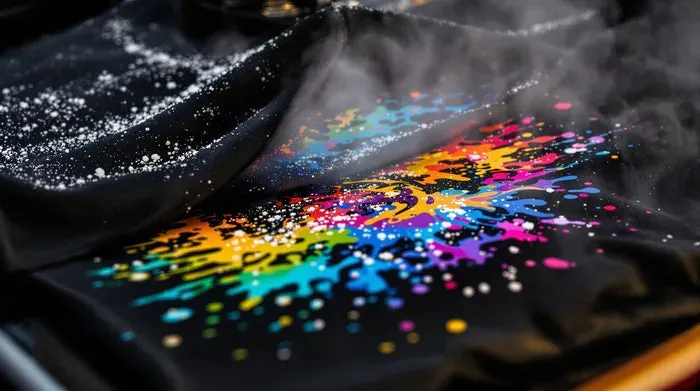
DTF Color Reproduction on Dark Garments has emerged as a powerful method for producing vibrant, durable designs on black and other dark-colored fabrics. As demand grows for full-color prints on apparel, mastering DTF color accuracy on dark fabrics, the influence of white underbases, and Curing and finishing for DTF on dark garments becomes essential. This article explores Direct-to-Film color reproduction techniques that photographers and printers can apply to improve color management and consistency. You’ll also find guidelines on DTF ink opacity on dark textiles to keep colors vivid through curing and wear. With practical tips for pre-treatment, underbase application, and color layering, readers can elevate their dark-garment projects from good to exceptional.
In other words, this approach translates to achieving vivid imagery on dark fabrics through film-transfer technology and pigment layering. Think of it as color fidelity on deep-toned textiles, where an initial white canvas, precise ink opacity, and careful heat-setting work together to preserve tone. Practitioners often reference tips for dark-garment printing, color-management workflows, and finishing steps that align with the broader field of Direct-to-Film color reproduction techniques. By focusing on underbase applications, curing parameters, and post-processing, designers can achieve consistent results across batches while keeping hand feel and wash resistance.
1. DTF Color Reproduction on Dark Garments: Achieving Vibrant Underbase and Color Layer Harmony
DTF Color Reproduction on Dark Garments presents a unique set of challenges and opportunities. The goal is to create a vibrant final image that sits cleanly on a dark substrate without dulling or color shifting, which means careful management of the white underbase and subsequent color layers. Achieving harmony between the underbase, color inks, and the garment’s base color requires thoughtful planning of layer order, ink density, and curing parameters to preserve the artwork’s intended brightness and detail.
Begin by establishing a robust underbase strategy: ensure even white coverage, control thickness, and verify that the underbase lays down smoothly across varied fabric textures. Pair this with precise print settings, reliable color management, and representative garment swatches to guide adjustments. When the workflow is holistic and each step supports the next, you’ll see improved color fidelity and a stronger sense of depth on dark fabrics.
2. DTF Color Accuracy on Dark Fabrics: Calibrations, ICC Profiles, and Pantone Validation
DTF color accuracy on dark fabrics hinges on a disciplined color-management pipeline. Start with device-independent workflows, calibrated ICC profiles wired to your DTF setup, and a tested target that mirrors the garment color you plan to print. This foundation helps translate your digital design into a faithful physical output, even when the substrate is black or near-black.
Use Pantone references and swatch validation to tune hue, saturation, and brightness before large runs. Document batch settings—pre-treatment type and amount, underbase thickness, curing time, and finishing method—so you can reproduce results consistently. This approach ensures that the same brand colors stay consistent across machines, days, and batches.
3. DTF Printing Tips for Dark Garments: Practical Guidance on Underbase, Ink Density, and Alignment
DTF printing tips for dark garments emphasize solid white underbase coverage, precise ink density management, and careful alignment. A dense white underbase provides a vivid canvas for color inks and minimizes color bleed through the fabric. Balance is key: too much ink can lead to stiffness or cracking, while too little reduces vibrancy on dark fabrics.
Fine-tune color alignment by ensuring the white underbase and color layers align precisely, especially around small details and edges. Conduct fabric-specific tests to observe how different fibers respond to pre-treatment and curing, then adjust pre-treatment amounts, curing temperatures, and pass counts accordingly. This method yields crisper images with fewer halos and edge artifacts.
4. Direct-to-Film Color Reproduction Techniques for Dark Garments: Layering Strategy, Film Quality, and Edge Control
Direct-to-Film color reproduction techniques for dark garments rely on a deliberate layering strategy and high-quality films. Start with a white underbase print, followed by color layers, and consider a tint or light-colour pass to perfect skin tones or challenging hues before final colors. The film thickness and adhesive compatibility with dark textiles are critical to achieving maximum opacity and durable color fidelity.
Edge control is essential on black or dark backgrounds. Use edge-smoothing methods and protective coatings where available to keep edges crisp and reduce color bleeding at transitions. Select films designed for dark fabrics and test edge behavior across different garment finishes to ensure consistent results from run to run.
5. DTF Ink Opacity on Dark Textiles: Balancing Underbase and Color Ink for Rich Hues
Opacity is a central concern when reproducing art on dark textiles. Achieving a faithful look involves balancing the white underbase thickness with the opacity of color inks so the original artwork reads correctly. An inconsistent opacity can cause colors to appear washed out or skewed against the garment color.
Focus on uniform white layering to prevent color loss and boost vibrancy. If colors look dull, revisit ink density, underbase thickness, and curing conditions. Regular maintenance of the white ink system and calibration of ink flow help sustain high opacity and color richness across runs.
6. Curing and Finishing for DTF on Dark Garments: Temperature, Time, and Post-Cure Considerations
Curing and finishing for DTF on dark garments are critical for color longevity and wash-fastness. Use recommended curing parameters to avoid scorching or under-curing, and ensure even heat and pressure across the print. Over-curing can make prints feel brittle, while under-curing invites color cracking and washout.
Finalize with careful post-curing and cooling steps if your workflow supports them. Cooling should be gradual to prevent warping, and finishing treatments can improve color fastness and softness without compromising print integrity. Consider protective finishes that enhance wash resilience while maintaining the garment’s hand feel.
Frequently Asked Questions
What is DTF Color Reproduction on Dark Garments and why is white underbase critical for color accuracy on dark fabrics?
DTF Color Reproduction on Dark Garments refers to producing vibrant, faithful prints on black or other dark fabrics. A strong white underbase is essential because it creates a neutral canvas for color inks, preventing the base fabric color from dulling hues. Validate color accuracy with ICC profiles and garment swatches before large runs.
What are the essential DTF printing tips for dark garments to improve color accuracy and opacity on dark fabrics?
DTF printing tips for dark garments include applying a solid, even white underbase, optimizing ink density through controlled passes, and ensuring precise alignment between the white base and color layers. Conduct fabric testing and maintain consistent pre-treatment to stabilize color and texture across batches.
What Direct-to-Film color reproduction techniques help achieve consistent results on dark fabrics?
Direct-to-Film color reproduction techniques for dark fabrics emphasize stacking order (white underbase first, then color layers), appropriate film thickness for opacity, and edge-smoothing methods to keep edges crisp. Use garment swatches to validate color targets and adjust workflow before production.
How does DTF ink opacity on dark textiles influence color vibrancy and wash-fastness, and how can you optimize it?
DTF ink opacity on dark textiles controls how bright colors appear over the white underbase. Achieve uniform opacity by ensuring consistent underbase thickness and ink density, and maintain white ink durability to preserve vibrancy after washing. Regular ink-system maintenance and wash tests help ensure color retention across cycles.
What curing and finishing for DTF on dark garments steps are essential to prevent cracking and color loss?
Essential curing and finishing for DTF on dark garments include selecting appropriate curing temperature and time to avoid under- or over-curing, applying even heat and pressure, and allowing gradual cooling. Consider post-curing or finishing treatments that boost wash-fastness while maintaining softness.
How should you set up a color management workflow for DTF Color Reproduction on Dark Garments to ensure color accuracy across batches?
Develop a device-independent color management workflow using ICC profiles, garment-based targets, and soft-proofing. Validate with Pantone references and fabric swatches, and document batch settings (pre-treatment, underbase, curing, finishing) to reproduce consistent results across runs.
| Aspect | Key Points | Why It Matters | Practical Tips |
|---|---|---|---|
| White underbase coverage | A strong white underbase is essential on dark fabrics; creates a canvas for color inks; thickness and evenness directly affect color accuracy and reduce show-through. | Without a solid underbase, colors appear dull or shift due to the garment color. | Aim for dense, uniform underbase; verify coverage with a test print; adjust passes as needed. |
| Ink opacity and formulation | Ink opacity determines color visibility on dark garments; insufficient opacity dulls colors and may wash out after curing/washing. | Impacts vibrancy and wash-fastness of final design. | Use inks with high opacity for bright colors; balance opacity with curing to avoid stiffness. |
| Substrate compatibility | Fabric content influences ink adhesion and color rendering; cotton versus polyester blends behave differently. | Affects color accuracy and durability; requires different pre-treatment and curing parameters. | Match pre-treatment and curing to garment fiber; test on representative swatches. |
| Pre-treatment and surface preparation | Controlled pre-treatment improves ink adhesion, uniform absorption, and color stability; over/under-application leads to uneven color and texture. | Ensures consistent results across garments. | Calibrate pre-treatment amount; ensure even application and proper drying. |
| Print settings and color management | Printer profile, ICC calibration, and color-management workflows affect final color mapping. | Accurate calibration ensures designs match the garment. | Use device-independent workflows; soft-proof with garment baseline; test on similar fabrics. |
| Curing and finishing | Proper curing (heat, time, and pressure) is critical for color longevity; finishing and post-curing can improve wash-fastness and feel. | Prevents color cracking, fading, and transfer. | Follow validated curing parameters; perform post-curing if recommended; ensure even heat. |
Summary
DTF Color Reproduction on Dark Garments is a nuanced process that combines color management, underbase precision, ink opacity control, and careful curing and finishing to deliver vibrant, durable designs on black and other dark fabrics. A holistic workflow that includes pre-treatment, ink formulation, substrate compatibility, color management, curing, and finishing leads to consistent results across batches and washes. By documenting batch settings, validating with garment swatches, and performing wash tests, practitioners can minimize color shifts and defects while delivering high-quality prints that meet both aesthetic goals and performance expectations.